The Loire Valley castles are France’s most romantic road trip: more than 300 châteaux along one river, from royal palaces to family-owned estates still lived in today. In this guide, I share the best châteaux in the Loire Valley, the wine to taste near each one, and the hidden gems most visitors drive straight past. — Stéphanie
The Magic of Loire Valley Wine Tours
From fairy-tale castles to secret family estates, the Loire Valley hidden gems make it one of France’s most enchanting wine regions, where Renaissance châteaux rise majestically above rolling vineyards and crystal-clear rivers wind through picturesque landscapes. A wine tour through this UNESCO World Heritage Site offers more than just exceptional wines—it’s an immersive journey through French history, architecture, and gastronomy.
From the crisp Sancerre to the delicate Vouvray, the Loire Valley produces some of the world’s finest white wines. Combined with visits to legendary castles like Chambord and Chenonceau, a luxury Loire Valley tour creates an unforgettable experience that perfectly balances cultural discovery with oenological excellence.

The 9 Best Loire Valley Castles and the Wine to Taste Nearby
The Loire Valley boasts over 300 châteaux, each with its own fascinating story. These architectural masterpieces aren’t merely historic monuments—many maintain their own vineyards and cellars, offering visitors the rare opportunity to taste wines produced on royal estates. Choosing is the hardest part. These are the Loire Valley castles I recommend most, each paired with a wine to taste a short drive away.
Château de Chambord
The largest château in the Loire Valley, Chambord was begun in 1519 for King François I and is French Renaissance architecture at its finest. Its famous double-helix staircase, said to be inspired by Leonardo da Vinci, lets two people climb and descend at the same time without ever meeting. At the top, the rooftop terraces open onto a skyline of towers, chimneys and lanterns, once used by the court to watch the royal hunts below.
Those hunts took place in the vast walled park around the château, considered the largest enclosed park in Europe, where deer and wild boar still roam freely. Take time to wander through the royal apartments, then walk or cycle along the forest paths and canals for unforgettable views of the façade.
Our VIP experience. I recommend Chambord’s VIP visit, which ends with a tasting of wines from the region’s estates, paired with a platter of local cheeses and charcuterie.
Wine nearby: Cheverny and Cour-Cheverny, home of the rare Romorantin grape, 20 minutes away.

Château de Chenonceau
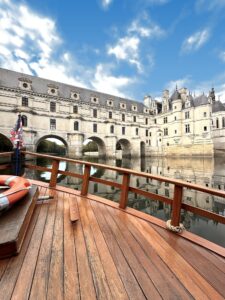
Stretching across the river Cher on graceful arches, Chenonceau is known as the “Ladies’ Château”, because women shaped it for five centuries. Diane de Poitiers, the favorite of King Henri II, built its bridge and her famous garden. After the king’s death, Queen Catherine de’ Medici took the château back and added the elegant gallery that runs across the river. During the Second World War, the Cher marked the line between occupied and free France, and the gallery became a secret passage to freedom.

Don’t miss the kitchens set inside the bridge piers, the fresh flower arrangements in every room, and a stroll through Diane’s and Catherine’s gardens. End your visit in the château’s 16th-century wine cellar, the Cave des Dômes, with a tasting of Chenonceau’s own Touraine wines, from crisp Sauvignon Blanc to fruity reds. Many travelers call it the most beautiful château in France.
Wine nearby: the château’s own cellar, and the Touraine-Chenonceaux appellation all around it.
Château Royal d’Amboise and Clos Lucé
Perched high above the Loire, the Château Royal d’Amboise was home to the kings of France for generations. Charles VIII was born and died here, and the young François I grew up within its walls. Walk the terraces for one of the finest views of the river, then climb the Minimes Tower, whose wide spiral ramp let horsemen ride straight up into the château. In the delicate Gothic chapel of Saint-Hubert, you’ll find the tomb of Leonardo da Vinci.
A short walk away, the Clos Lucé was Leonardo’s last home. At the invitation of François I, he spent his final three years here, from 1516 to 1519. Legend says an underground passage linked the two houses so the king could visit his friend in secret. Today you can explore his bedroom, his workshops and a park filled with life-size models of his inventions.
Wine nearby: Touraine-Amboise, and Vouvray and Montlouis Chenin Blanc 20 minutes upriver.
Château de Villandry
Famous for its Renaissance gardens arranged in geometric perfection, Villandry represents the harmonious relationship between architecture and nature, and includes an ornamental kitchen garden laid out like embroidery. Come in late spring or early summer, when the gardens are at their best. The estate produces wines that reflect this same attention to detail and balance.
Wine nearby: Chinon Cabernet Franc, about half an hour away.
Château d’Azay-le-Rideau
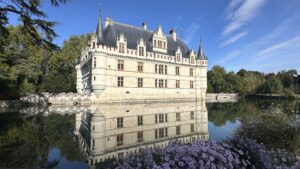
Rising from an island in the Indre river, Azay-le-Rideau seems to float on its own reflection. It was built in the 1520s by Gilles Berthelot, treasurer to King François I, but it was his wife, Philippe Lesbahy, who oversaw the works day to day. When Berthelot fell from favor, the king seized the château, and it never returned to the family. Balzac, who wrote in the nearby Château de Saché, called it “a faceted diamond set in the Indre.”
Inside, the elegant Renaissance staircase and the richly furnished rooms bring its story to life. Outside, the romantic park and its water mirrors offer the most photographed view in the Loire Valley, especially in the soft light of early morning or late afternoon.
Wine nearby: the small Touraine Azay-le-Rideau appellation, then Chinon Cabernet Franc, 25 minutes away.
Château de Cheverny
Cheverny feels less like a monument and more like a home, because it is one. The Hurault family has owned the estate for more than six centuries, and their descendants still live in one wing. The château was finished in 1634 in an elegant classical style. Its pale stone façade is so perfectly symmetrical that it inspired Hergé’s Marlinspike Hall in the Tintin books. Inside, Cheverny has some of the finest original furnishings in the Loire Valley: painted ceilings, Gobelins tapestries, the King’s Bedroom and a grand staircase carved in stone.
Outside, the château keeps a living hunting tradition. Its kennels house around a hundred hounds, and watching their famous feeding ritual is a highlight for every visitor. Take time for the gardens too, especially in spring, when hundreds of thousands of tulips bloom across the park.
Wine nearby: the château sits in the heart of the Cheverny and Cour-Cheverny appellations. Cour-Cheverny is the only appellation in the world that makes wine from Romorantin, a rare white grape planted by order of François I. Taste a crisp Cheverny Sauvignon Blanc, then an aged Romorantin, at a small family-owned estate a few minutes from the château.
Château Royal de Blois
Seven kings and ten queens of France lived at Blois, and its courtyard tells the whole story of French architecture in one glance. Four wings face each other: the Gothic brick wing of Louis XII, the Renaissance wing of François I, and the classical wing designed by François Mansart for Gaston d’Orléans. The star of the courtyard is François I’s open spiral staircase, carved with his emblem, the salamander.
Blois is also a château of intrigue. In 1588, King Henri III had his rival, the Duke of Guise, assassinated here. Catherine de’ Medici’s study still has its carved wood panels, four of which hide secret cabinets. On summer evenings, a sound and light show brings this history to life on the courtyard walls.
Wine nearby: the vineyards of Cheverny are just 20 minutes away, and the Touraine-Mesland appellation lies along the Loire between Blois and Amboise.
Château de Chaumont-sur-Loire
High on a cliff above the river, Chaumont looks like a fairy-tale fortress. In 1559, Catherine de’ Medici forced her rival Diane de Poitiers to give up Chenonceau and move here instead. Today Chaumont is the Loire Valley’s home of art and gardens: every year from April to early November, its International Garden Festival shows creative gardens by landscape artists from around the world, and contemporary art fills the château and its luxurious 19th-century stables.
Wine nearby: Chaumont sits in the Touraine appellation, and the small Touraine-Mesland vineyards are just across the river. Taste fresh Sauvignon Blanc and fruity red blends at a family-owned estate, then continue to Vouvray and Montlouis, about 40 minutes away, for elegant Chenin Blanc.
Hidden gem: Château de Brézé
Near Saumur, this castle hides an underground world of tunnels and cellars carved into the tuffeau stone, below some of the deepest dry moats in Europe. It’s also a working wine estate.
Wine nearby: Brézé’s own Saumur wines, and Saumur-Champigny red.
From Château to Cellar: The Best Loire Valley Wines
Sancerre and Pouilly-Fumé: the home of Sauvignon Blanc
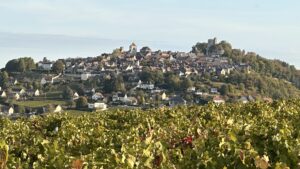
At the eastern end of the Loire Valley, two villages face each other across the river and make some of the most famous Sauvignon Blanc in the world. Sancerre sits on its hilltop above steep vineyards of chalk and flint, and its wines are crisp and mineral, with notes of citrus and white flowers. Across the Loire, Pouilly-Fumé grows on flint soils that give the wine its signature smoky touch, which is where the name “fumé” comes from. A private tasting with a winemaker in either village is the best way to taste how soil shapes a wine.
Chenin Blanc: the Loire’s most versatile grape
In the heart of the valley, Chenin Blanc shows every style a white grape can offer. In Vouvray and Montlouis, near Amboise, it makes sparkling wines, dry whites and golden sweet wines that can age for decades, often in cellars carved into the tuffeau limestone. Further west, Savennières makes some of the most elegant dry Chenin in France, and Saumur makes fine sparkling Crémant de Loire.
Vouvray and Montlouis-sur-Loire
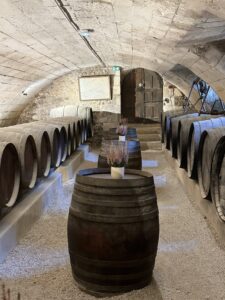
Chenin Blanc reaches its zenith in these appellations near Tours. From bone-dry to lusciously sweet, from still to sparkling, Vouvray demonstrates remarkable versatility. The region’s tuffeau limestone caves provide perfect natural cellaring conditions, and many producers welcome visitors for intimate tastings in these atmospheric underground spaces.
Muscadet
At the Loire’s western edge near the Atlantic, Muscadet produces refreshing, mineral-driven wines perfect for the region’s seafood cuisine. The best examples, labeled “sur lie,” develop complexity through extended contact with yeast sediments.
Cabernet Franc: the red wines of the Loire
Around Chinon, Bourgueil and Saumur-Champigny, Cabernet Franc makes fresh, fragrant reds with notes of red fruit and violets. They are perfect with a cheese and charcuterie platter after a château visit.
An Exclusive Experience: A Private Loire River Cruise with Wine Pairing
The Loire is France’s last wild river, and the most magical way to see it is from the water. Aboard a traditional wooden boat, a toue or gabare like the ones that once carried wine and stone along the river, you glide past sandbanks, islands and riverside villages. Herons and terns fly overhead, and the castles appear on the banks just as travelers saw them centuries ago.
For our guests, we arrange a private cruise for your group only, with a menu of local specialties prepared by a chef and paired with Loire Valley wines. Choose a long lunch in the sunshine, or a dinner cruise at golden hour, when the light turns the river and the vineyards to gold. Each course is matched with a wine from the region, from a crisp Sauvignon Blanc to a Chenin Blanc or a fresh Cabernet Franc, and we explain the story behind every glass.
It is a slow, unforgettable moment between two château visits, and one of the experiences our clients remember most.
Planning Your Luxury Loire Valley Tour
A bespoke Loire Valley wine tour should balance château visits, wine tastings, and regional cuisine. Spring and autumn offer ideal conditions—comfortable temperatures, fewer crowds, and stunning landscapes. Summer brings lavender blooms and outdoor dining, while winter offers a more intimate experience.
Transportation and Logistics
Private chauffeured transportation allows you to relax and enjoy tastings without concern. Expert guides provide historical context and insider access to prestigious estates and hidden gem producers rarely open to the public.
Where to Stay
The Loire Valley offers exceptional accommodations, from luxurious château hotels to charming boutique properties in historic towns.
The best way to visit the Loire Valley castles is to sleep in one. We arrange private château stays and reserve the region’s finest hotels, each chosen for its setting, its table and its welcome.
Around Blois and Chambord. Fleur de Loire, on the banks of the river in Blois, is home to chef Christophe Hay’s celebrated restaurant. Les Sources de Cheverny, set among vineyards and forest, pairs a spa with the wines of Cheverny. From either one, Chambord, Cheverny and Blois are less than half an hour away.
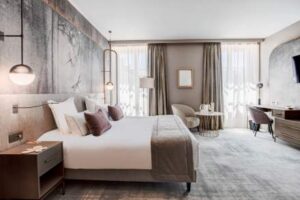
Around Amboise. The newly renovated Relais d’Amboise is an ideal base for the Château Royal d’Amboise, Clos Lucé and Chenonceau, with the Vouvray and Montlouis vineyards a short drive away.
Near Chaumont. Domaine des Hauts de Loire, a peaceful country estate in its own park, sits close to Chaumont-sur-Loire and its famous garden festival.
A private château, just for you. For the most exclusive stay, we arrange nights in privately owned châteaux, where the owners welcome you as house guests and the gardens are yours after the visitors have gone.

Culinary Experiences
Loire Valley cuisine celebrates local ingredients—rillettes, pike perch, goat cheese, and tarte tatin. Michelin-starred restaurants and casual bistros alike pair regional wines expertly with seasonal menus.

Creating Your Perfect Loire Valley Experience
The Loire Valley rewards those who venture beyond guidebook recommendations. Whether you’re drawn to grand châteaux, exceptional white wines, or authentic encounters with passionate winemakers, this region offers endless discovery. A thoughtfully crafted itinerary balances iconic sites with personal interests, creating memories that last long after the final glass is poured.
If France is calling you, let’s answer it together. Contact us at travel@ospreybt.com to start crafting your perfectly bespoke luxury journey in France. www.ospreybt.com
Your Questions Answered
Which is the most beautiful castle in the Loire Valley?
Most travelers choose Chenonceau, which spans the river Cher on elegant arches. Chambord is the most impressive in size, and Azay-le-Rideau and Villandry are the most romantic for their water and gardens.
How many castles are there in the Loire Valley?
There are more than 300 châteaux in the Loire Valley. About a dozen are must-sees, and the rest include private homes and hidden gems you can visit with the right introductions.
How many days do you need to visit the Loire Valley castles?
Plan three to four days to see five or six castles without rushing, with time for wine tastings and long lunches. Five days lets you add Saumur and the hidden gems further west.
What is the best time to visit the Loire Valley?
Late April to June and September to October are ideal: gardens in bloom in spring, the grape harvest in autumn, and fewer crowds than in July and August.